Mixing Warm and Cool: Modern Rooms That Don't Feel Cold
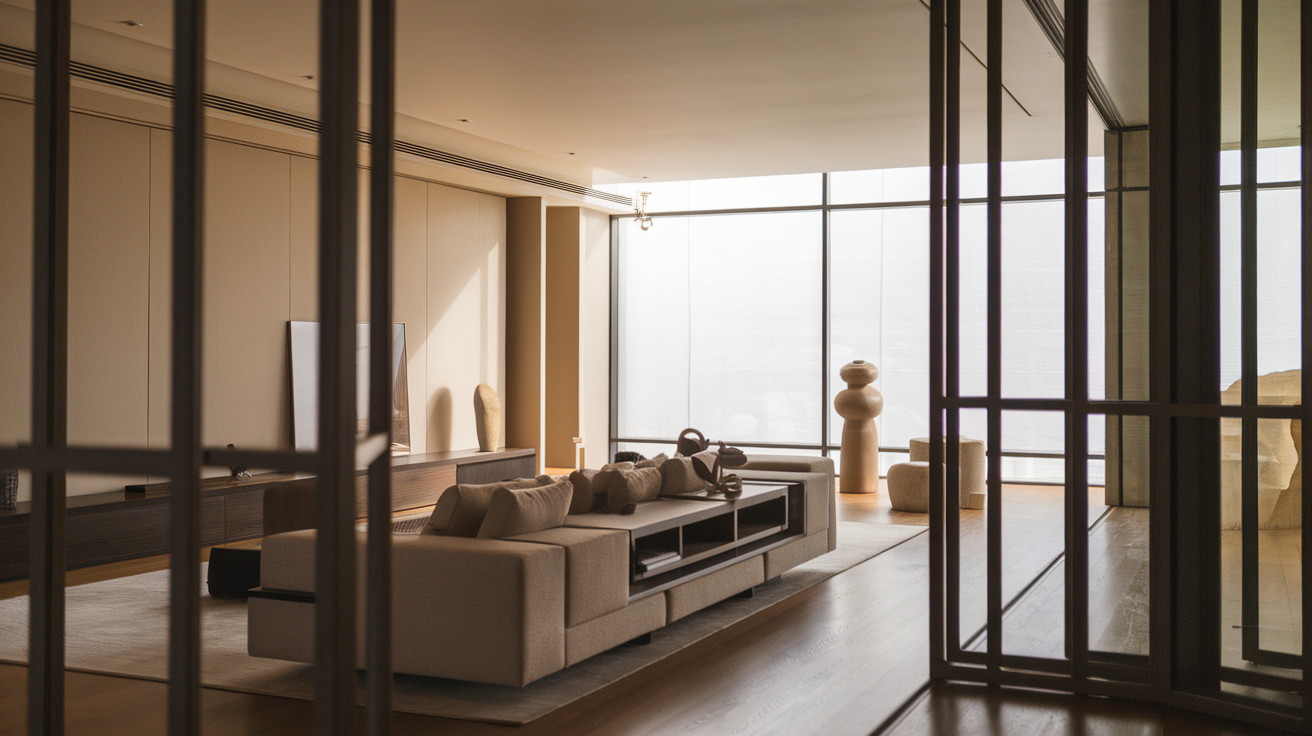
Modern design gets a bad rap for feeling cold — all grey, glass, and hard edges. But the coldness isn’t the minimalism’s fault. It’s what happens when a room is all one temperature. Fix the balance and a clean, spare room turns inviting without losing any of its calm.
Every material has a temperature
Before you even get to color, materials carry warmth or coolness. Wood, leather, brass, wool, and clay read warm. Steel, glass, concrete, chrome, and cool greys read cold. A room that leans all the way one direction feels off: all warm can get heavy and dim, all cool feels like a waiting room.
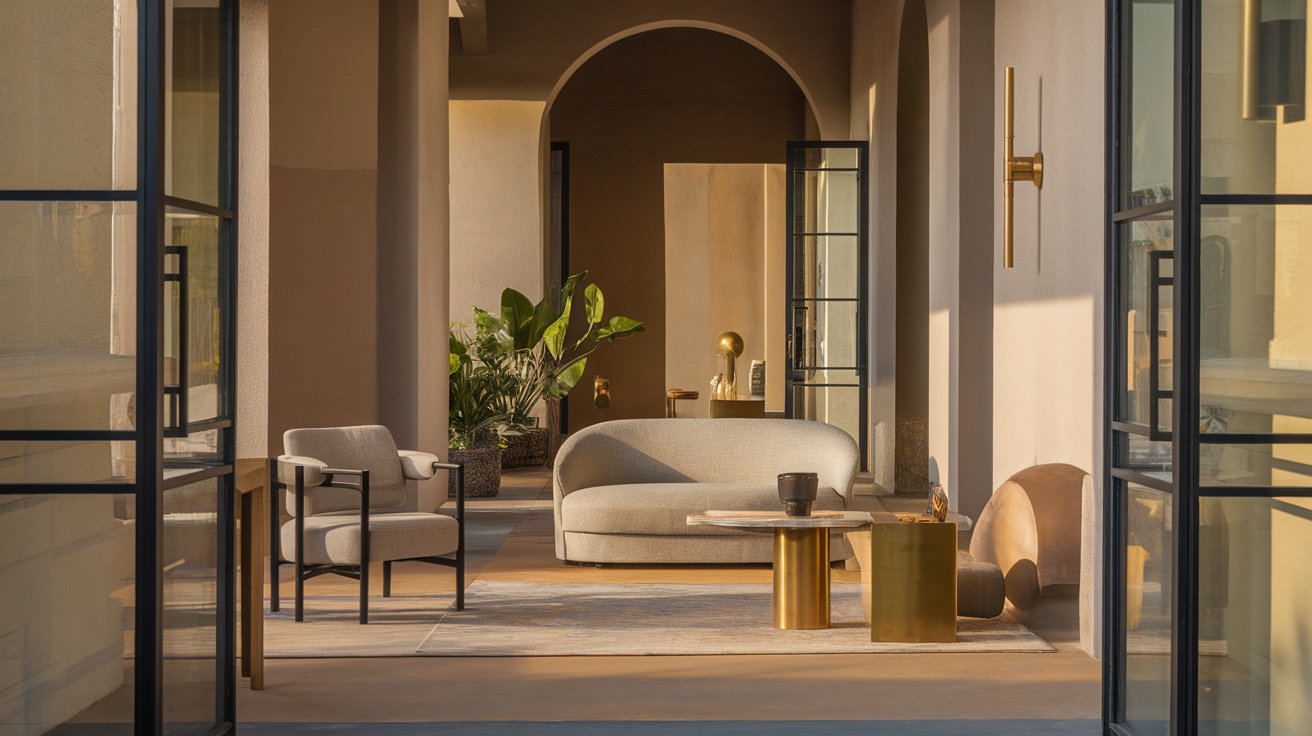
The good modern rooms are almost always a deliberate mix — a cool palette grounded by warm wood, or a warm room sharpened up with a few cool metal accents.
The 80/20 starting point
You don’t need a 50/50 split. Pick a dominant temperature for the big surfaces — say cool greys and white for the walls and sofa — then bring in warmth at around 20% through the things you touch:
- A walnut or oak table, or some open wood shelving
- Leather on a chair or bench
- Brass or aged-bronze hardware, legs, or lighting
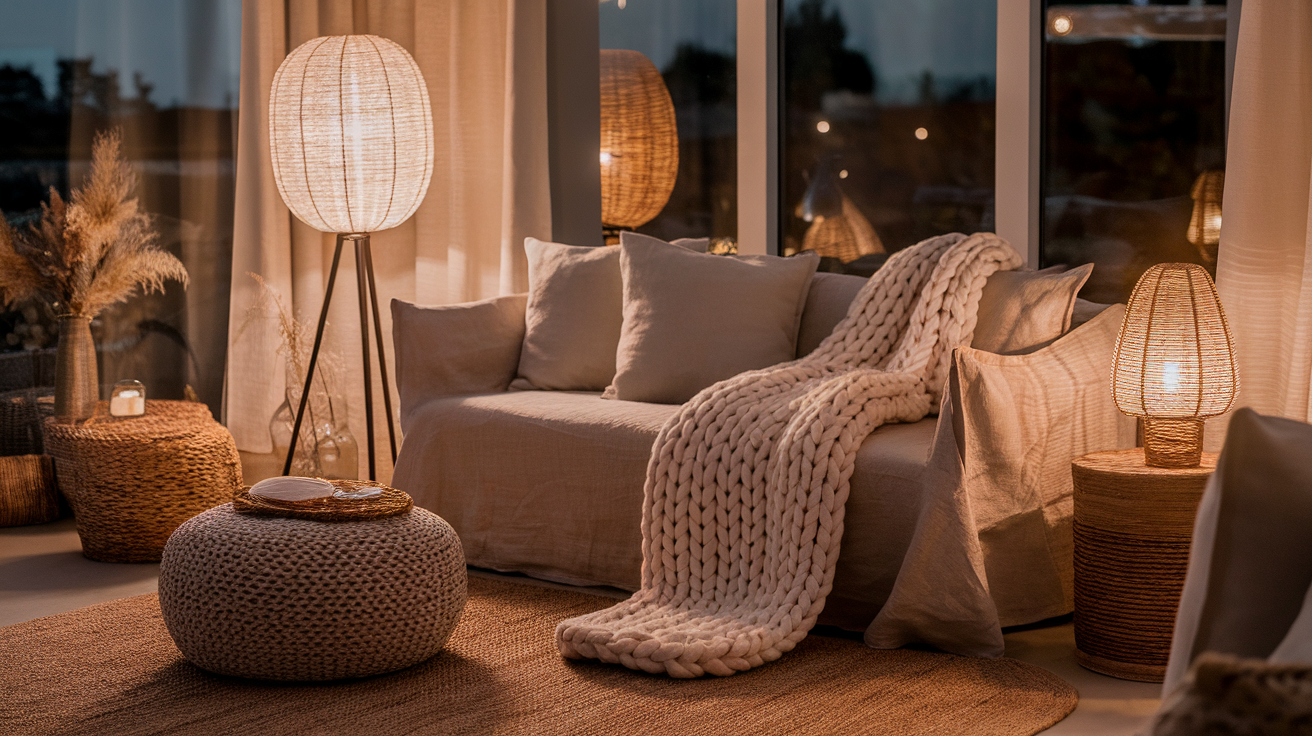
- One woven or wool textile — a rug, a throw
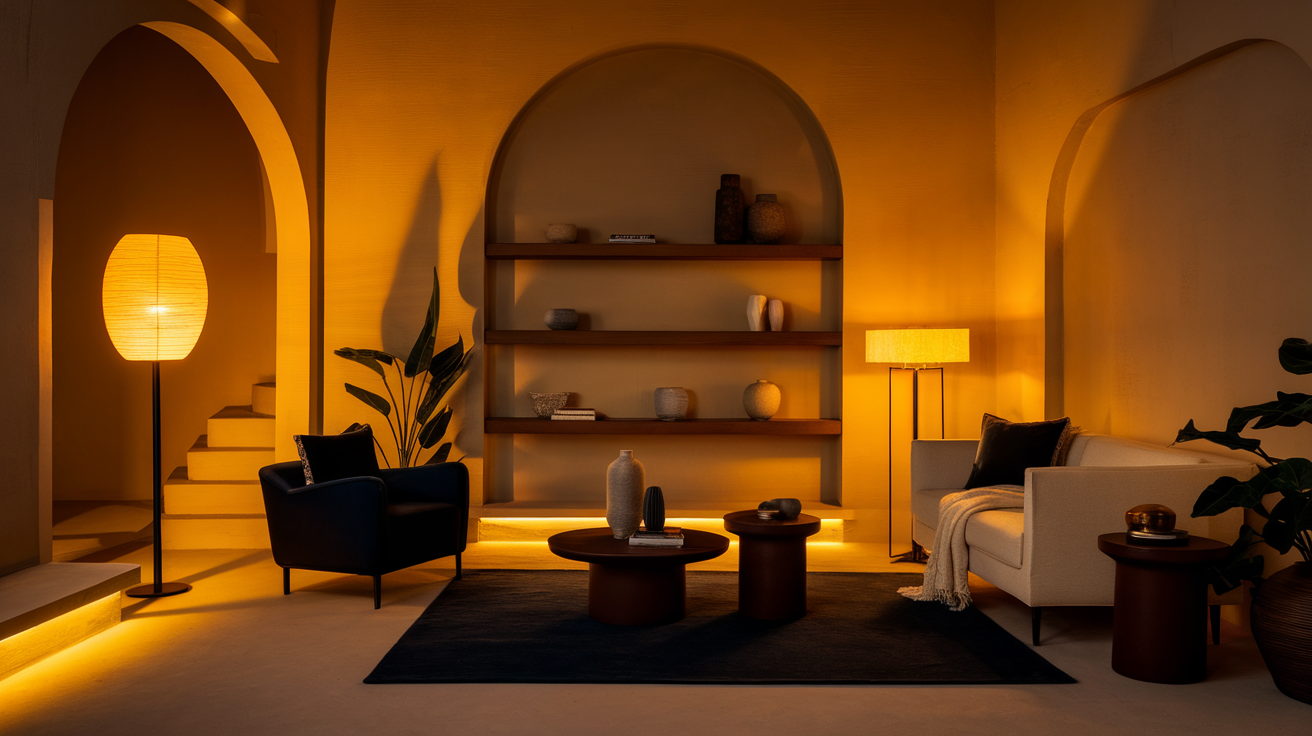
Flip it for a warm-dominant room: keep the wood and linen, then add a couple of matte-black or steel details so it doesn’t go soft and sleepy.
Warm your light first
The fastest way to kill a room’s warmth has nothing to do with materials — it’s a cold, blue-white bulb. Switch to warm bulbs (around 2700K) everywhere you actually relax. No amount of walnut survives 5000K daylight bulbs overhead.
If it feels sterile
Don’t add color — add temperature. Walk in and ask: is there anything in here I’d call warm to the touch? If the honest answer’s no, one wood or leather piece will do more than any throw pillow.