What Actually Makes a Room Feel Modern (It's Not the Furniture)
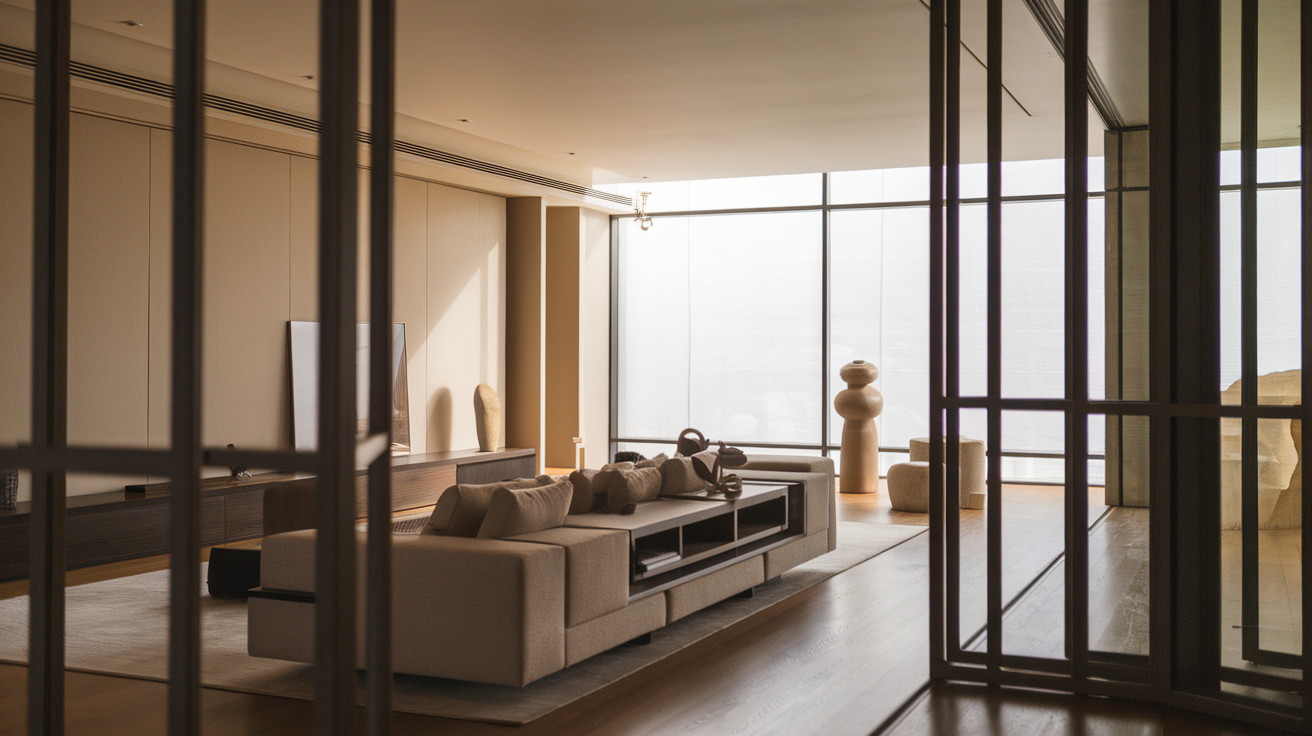
People tend to think “modern” is a style you buy — a specific sofa, a specific lamp, maybe something in walnut with tapered legs. But you can own every one of those pieces and still walk into a room that feels heavy and dated. Modern is less about what’s in the room and more about how much, and how it’s arranged.
Line does the talking
Modern rooms feel quiet because their lines are clean and mostly horizontal. Low furniture, unbroken surfaces, a few strong verticals for contrast. The second you add fussy detail — ornate legs, busy patterns, lots of little objects — your eye gets busy and the room reads “traditional,” or just “cluttered,” no matter how new the pieces are.
Quick test: squint at the room. If you see a few calm shapes, it’s reading modern. If you see a hundred little things, it isn’t.
Fewer, but better, with room to breathe
Modern spaces leave things out on purpose. That empty stretch of wall isn’t unfinished — it’s what lets the one piece of art actually land. Negative space is a design element, not a to-do item.
- Pick the three things a room genuinely needs, then resist adding a fourth
- Let at least one surface stay completely clear
- Give each real object enough room that it reads as deliberate
Contrast keeps it from going flat
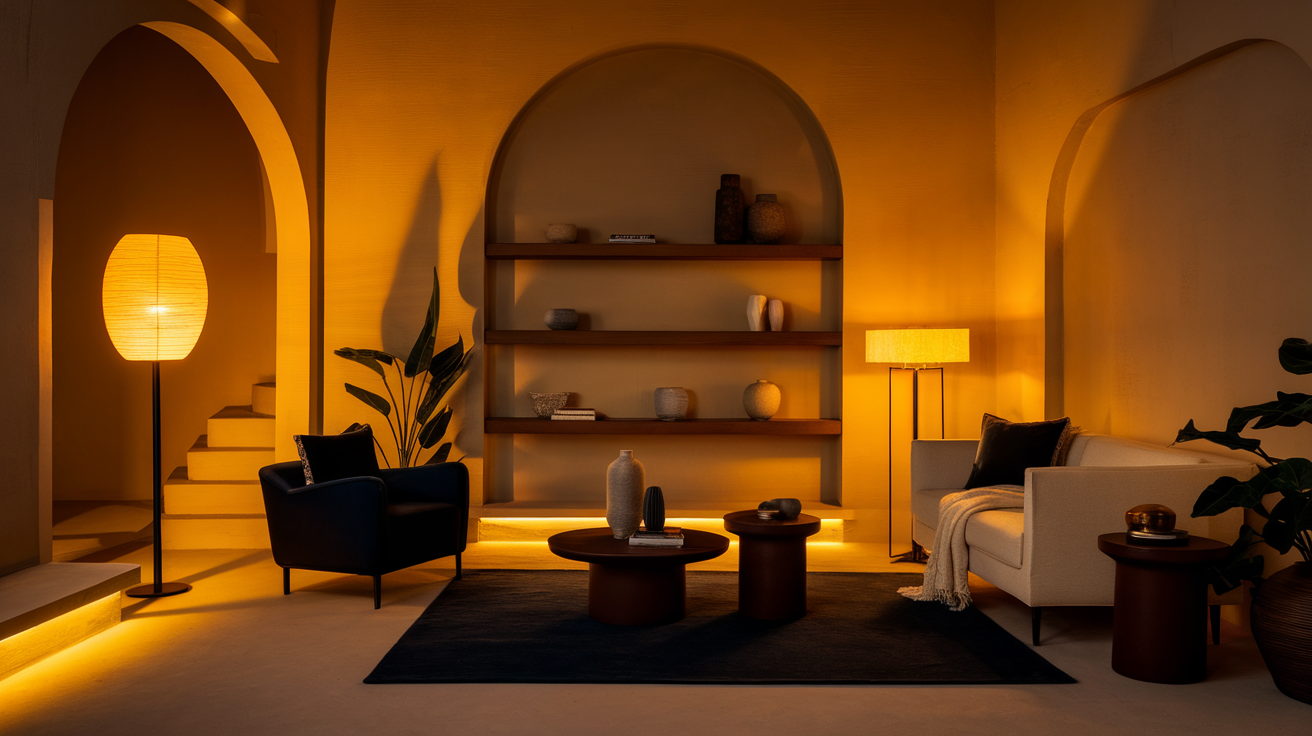
Restraint with no contrast turns cold and showroom-y. The fix is a bit of tension: warm wood against cool stone, one matte-black detail in a soft neutral room, a single curved shape among straight lines. One strong contrast per room is usually enough to make “minimal” feel intentional instead of empty.
When it feels almost-modern but off
Don’t buy another piece — take one away. Nine times out of ten the room was never missing something; it had one thing too many.